Why your UTI keeps coming back, and when it is not a UTI problem
Most recurrent UTIs have a urinary cause. Some come from the colon. The clues that point to diverticulitis and a fistula, and what to ask your doctor.

By Dr. Yosef Nasseri, colorectal surgeon
, 4 min read
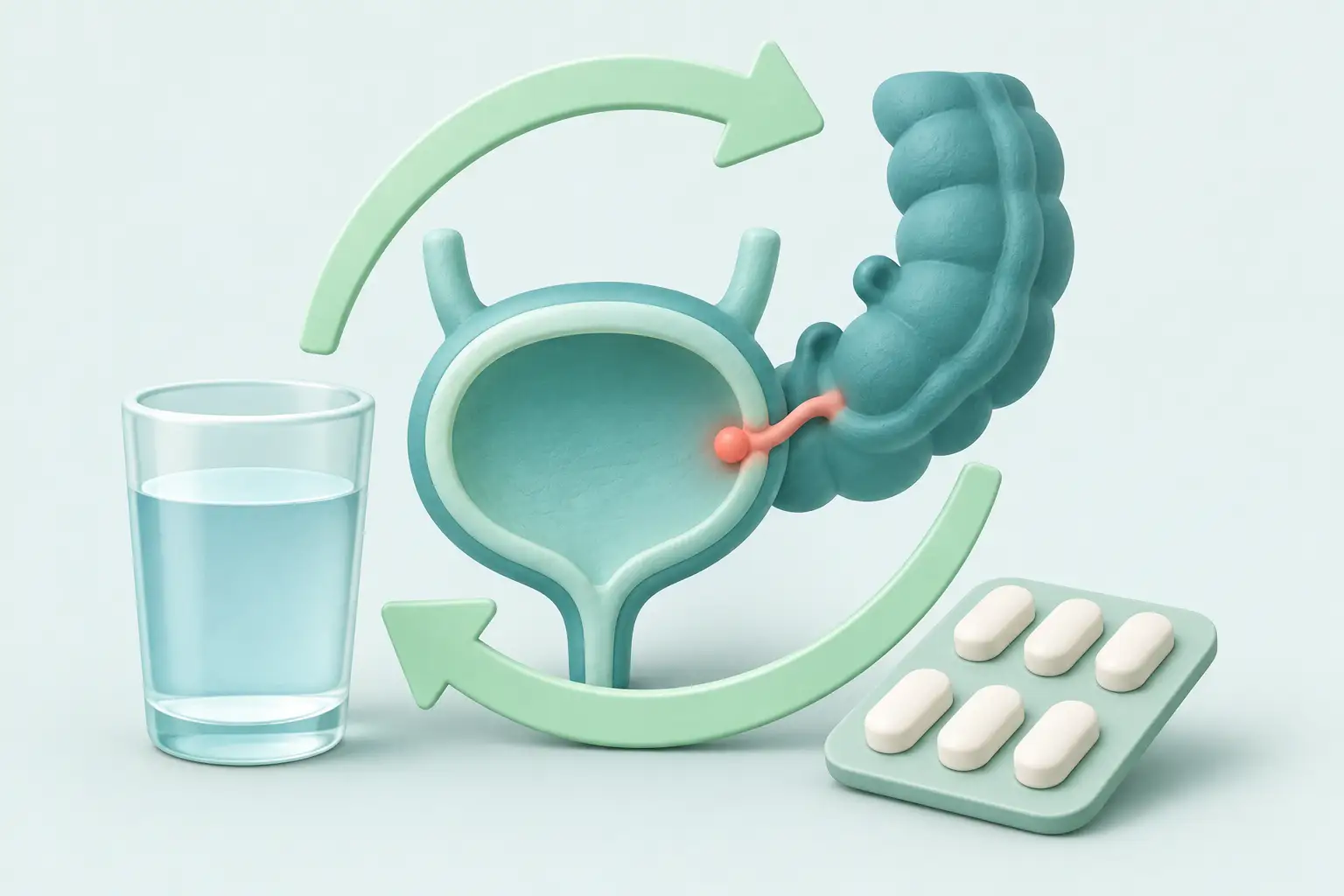
Urinary tract infections are very common, and many people have more than one. Doctors usually call it recurrent UTI when someone has two infections within six months, or three within a year. For most of them, the cause sits in the urinary tract itself, and a urologist or primary care doctor can help reduce how often they happen.
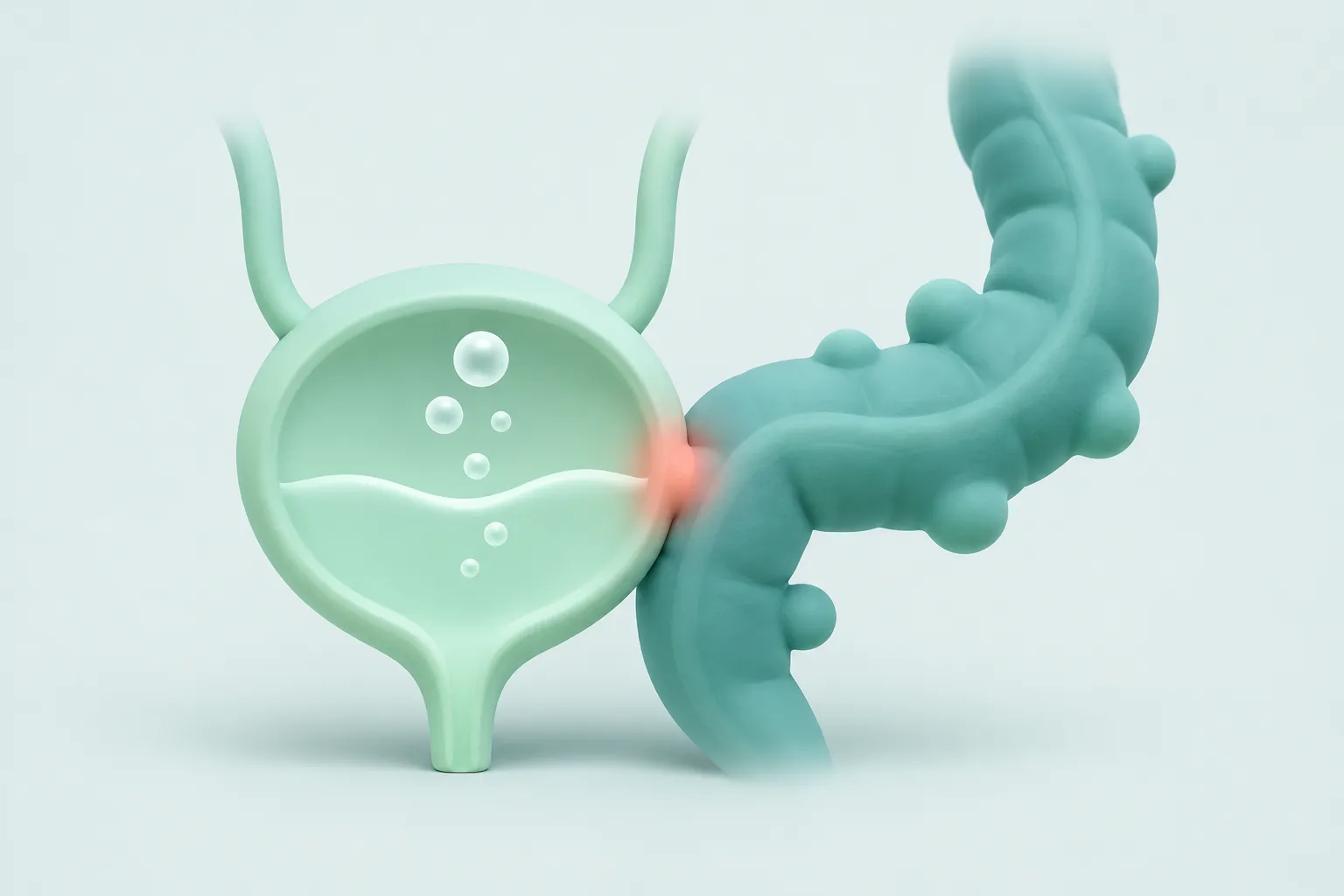
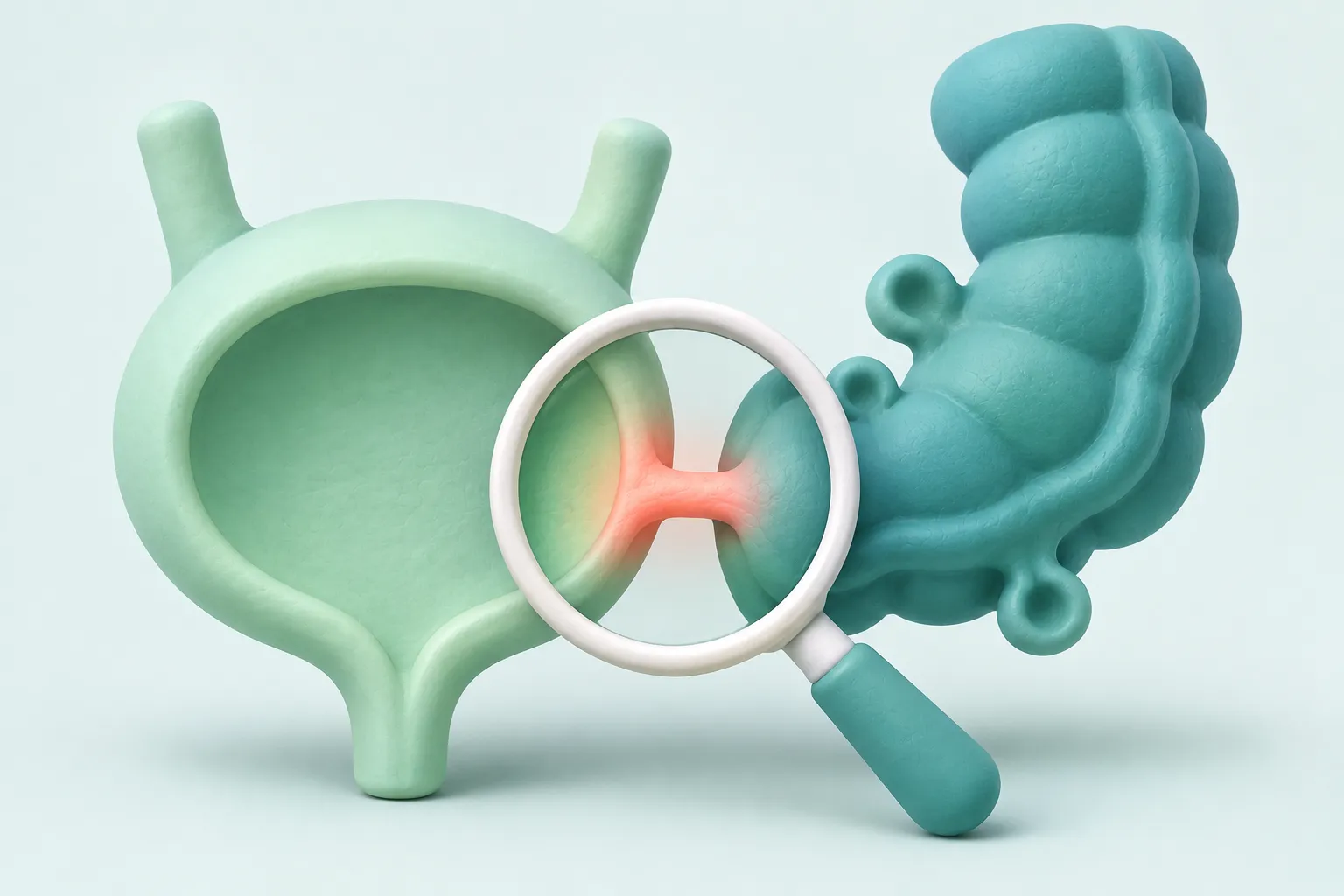
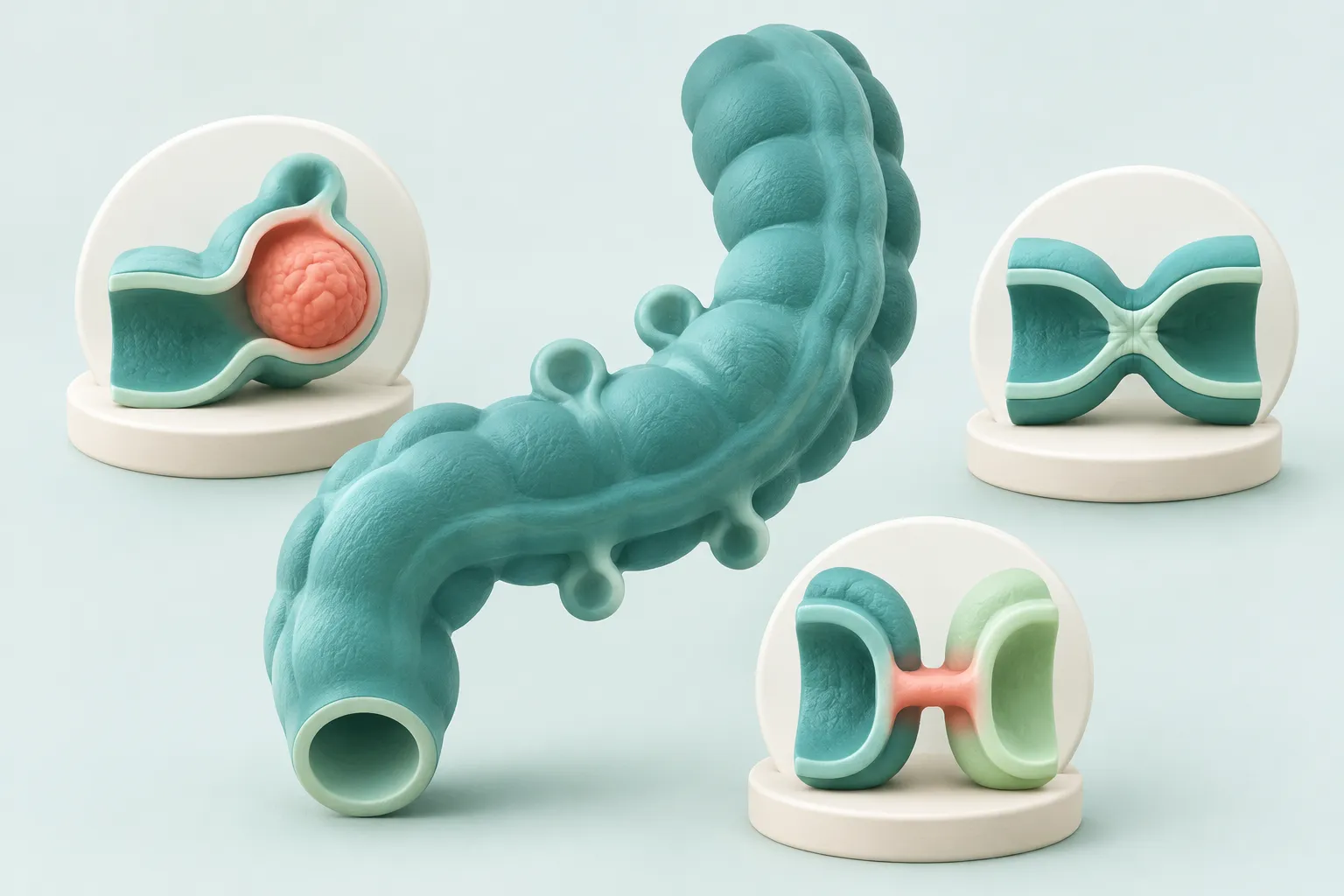
A smaller group keeps getting infections for a different reason. The bacteria are not climbing up from outside. They are coming from the colon, through a small opening into the bladder. That is called a colovesical fistula, and diverticulitis is its most common cause.
This article is about telling those two situations apart.
The usual reasons UTIs return
It helps to start with the common causes, because they are far more likely. Infections tend to come back more often in:
- Women, partly because of anatomy, and especially after menopause
- People who do not empty the bladder fully, for example because of an enlarged prostate in men or pelvic floor changes in women
- People with kidney or bladder stones
- People with diabetes
- People who use catheters
These are all worth looking into, and many are treatable. But if your infections have some of the features below, it is worth asking whether the colon is involved.
Clues that point toward the colon
| What you notice | Why it matters |
|---|---|
| Air or fizz in the urine | Gas in the bladder usually has to come from somewhere. The colon is one source |
| Urine that smells like stool, or has specks in it | Suggests bowel content is reaching the bladder |
| More than one type of bacteria on a urine culture | Bowel bacteria often grow together. A mix can be a hint |
| Infections in a man with no obvious urinary cause | UTIs are less common in men, so repeated ones deserve a closer look |
| A history of diverticulitis, or left lower belly pain | The sigmoid colon sits directly on the bladder |
| Infections that clear on antibiotics and return within weeks | The source is still there once treatment stops |
None of these proves a fistula on its own. Mixed bacteria, for example, can also come from how a sample was collected. But two or three of them together, especially in someone with a history of diverticulitis, are a reason to look further.
Why it gets missed
A fistula often does not cause much belly pain. The colon has usually calmed down by the time the opening forms, so the main symptoms are in the bladder. Each infection gets treated, settles, and then comes back.
It is also very easy for nobody to connect the dots. The urinary symptoms are seen by one doctor, an old CT scan mentioning diverticulitis sits with another, and the patient does not know the two might be related. I have met people who had many rounds of antibiotics before the colon was considered.
If you have read this far and recognize your own story, the most useful thing you can do is bring the pieces together for your doctor.
What to ask for
You can say it plainly: “I keep getting UTIs, and I have had diverticulitis. Could there be a connection with my colon?” Then it may help to ask about:
- A CT scan of the abdomen and pelvis. This is usually the most informative test. It can show air inside the bladder, thickening where the colon and bladder meet, and active diverticulitis.
- Your past urine cultures. Ask for copies. A pattern of mixed bacteria is useful information.
- Cystoscopy. A urologist looks inside the bladder with a thin camera. It may show where an opening is, and it helps rule out other bladder problems.
- Colonoscopy, if you have not had one recently. It checks the rest of the colon and helps exclude other causes before any surgery.
If you are not sure whether your symptoms fit, our pages on recurrent UTI and air bubbles in urine go into each sign.
If it is a fistula, what then?
Finding the cause usually brings some relief, because it means there is a fix. Antibiotics can calm an infection, but they rarely close a fistula. For most people who are healthy enough, the treatment is a planned operation. The surgeon removes the affected section of colon, typically the sigmoid colon, separates it from the bladder and repairs the small opening in the bladder wall.
This can often be done with a minimally invasive or robotic approach, and in most planned repairs the colon is joined back together during the same operation, so a colostomy is not usually needed. A urinary catheter stays in for a short time afterward while the bladder heals. Your surgeon will talk through your own situation in detail.
Because a fistula is rarely an emergency, there is usually time to do this properly: confirm the diagnosis, check the rest of the colon, and choose a surgery date that works for you.
When to seek urgent care
Go to an emergency room if a urinary infection comes with a high fever, shaking chills, back or side pain, vomiting, confusion or an inability to pass urine. These can mean the infection has spread and needs treatment straight away.
The point of all this
Most recurrent UTIs are not caused by diverticulitis. But for the people whose infections are, recognizing it can end a cycle that might otherwise go on for a long time.
If you have had diverticulitis and your infections keep coming back, especially with air in the urine or an unusual smell, consider getting it checked. You can start with the self-check, or book a consultation and bring your culture results and scans. We will look at the whole picture with you.

Dr. Yosef Nasseri, MD, FACS, FASCRS
Colorectal surgeon with Surgery Group LA who treats recurrent and complicated diverticulitis. Associate Professor of Surgery at Cedars-Sinai and Director of the SGLA Research Foundation.