Diverticulitis flare up again? Time for a real plan.
If recurrent diverticulitis has you on repeated antibiotics and missing work, planned surgery may be the safer way out.
- Appointments often within a week
- Most PPO plans accepted


Dr. Nasseri & Dr. BarnajianColorectal surgeons focused on diverticulitis · Cedars-Sinai
Small pouches in the colon wall
When they flare, that's diverticulitis
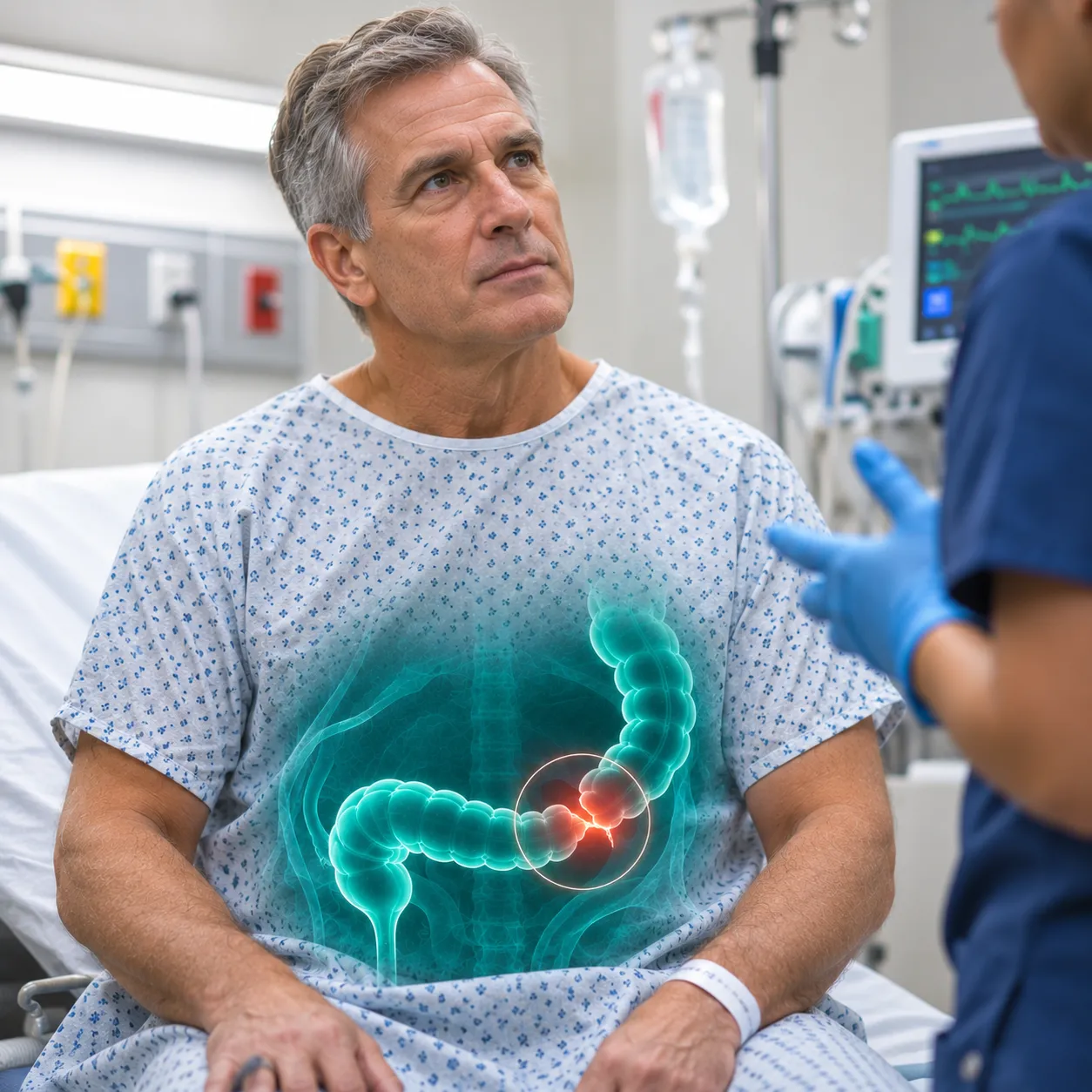
Two or more attacks?
Repeated flares are often the point where planned surgery is worth discussing.
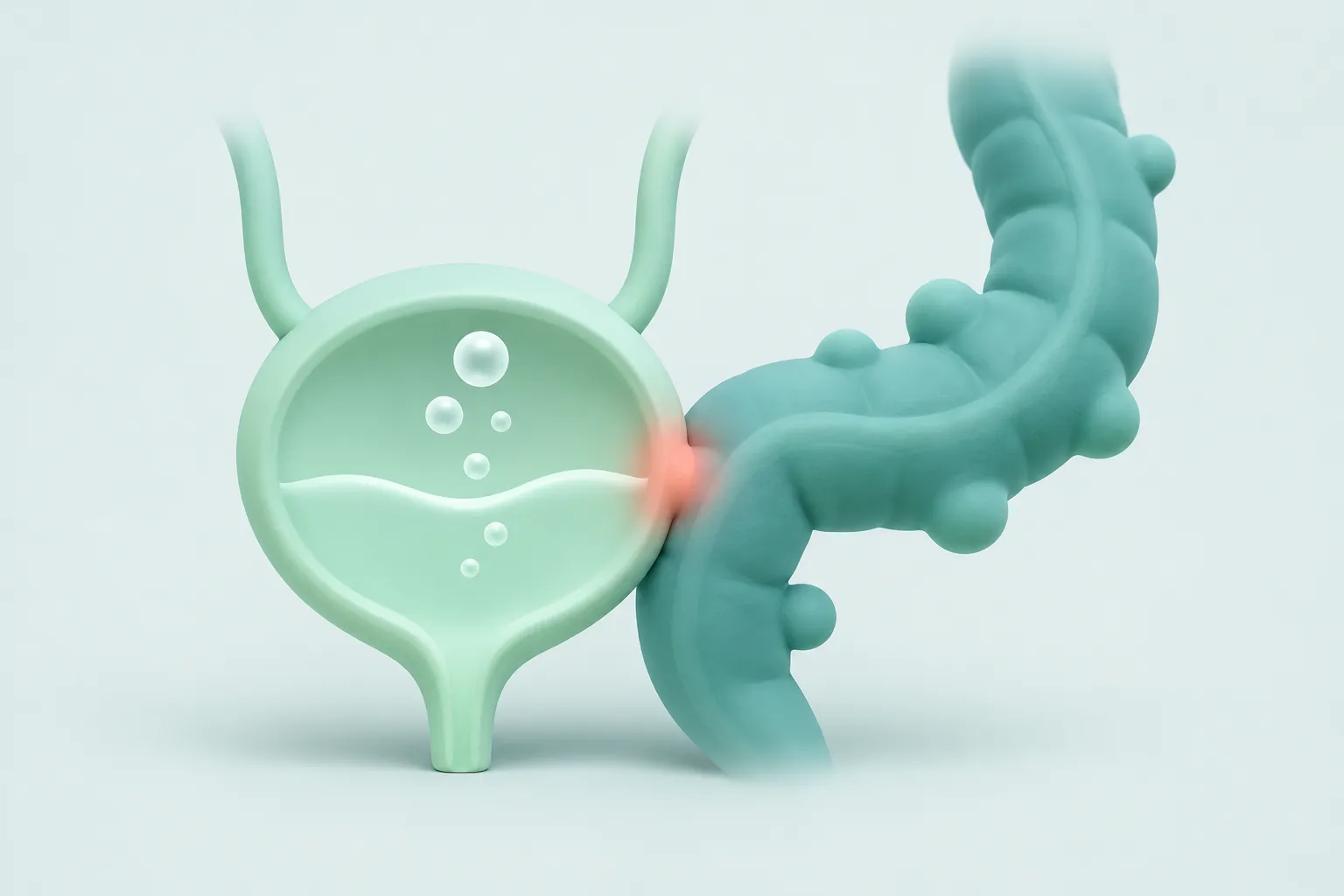
Air bubbles in your urine?
It can point to a fistula between the colon and bladder.
Surgery on your calendar, not in the ER
Timing changes the operation and the recovery.
Robotic, small incision surgery
Fellowship trained colorectal surgeons who operate robotically whenever it suits the case.
Antibiotics, a few good weeks, then it starts again.
The attack
Sharp pain low on the left, fever, a day or two of hoping it settles.
Antibiotics, maybe the ER
Another course of pills, sometimes a CT scan and a night in the hospital.
A few good weeks
You eat carefully, plan around it and hope that was the last one.
Then it starts again
Work trips, family plans and meals all start to bend around the next flare.
And back to step one.
Many people with recurrent diverticulitis are in their 40s and 50s, busy with careers and families. Living attack to attack takes more out of life than the pain alone.
If this sounds familiar, a conversation with a colorectal surgeon can show you whether there is a better option for you.
Take the 1 minute self-checkDiverticulitis surgery is a very different experience when it's planned.
Dr. Nasseri's advice to patients with repeated attacks: don't wait for the emergency. Here's how the two paths usually compare.
Timing
Planned surgery: You and your surgeon pick a date, after the inflammation has calmed down.
Emergency surgery: Happens during a severe attack, often in the middle of the night.
Approach
Planned surgery: Usually minimally invasive or robotic, through small incisions.
Emergency surgery: More often open surgery through a larger incision.
Colostomy
Planned surgery: In most planned operations the colon is reconnected in the same surgery.
Emergency surgery: A temporary colostomy bag is needed more often.
Your life
Planned surgery: Time to arrange work leave, childcare and help at home.
Emergency surgery: No time to prepare. Recovery often takes longer.
Not everyone with diverticulitis needs surgery. Your surgeon will look at your history, imaging and goals before recommending anything.How diverticulitis surgery works
Talk to a surgeon about timingIs it time to see a surgeon about your diverticulitis?
Three quick questions about your attacks, your treatment and any new symptoms. You'll get a plain answer about whether a consultation makes sense now.
- Two or more attacks
- The point where many people start asking about surgery.
- Repeated antibiotics or ER visits
- A sign the condition is shaping your year.
- A possible complication
- Fistula, abscess or narrowing usually needs a surgeon's opinion.
This is not a diagnosis, and your answers stay in your browser. If you have severe pain, fever or vomiting, go to the nearest emergency room.
Robotic colectomy for diverticulitis, planned around your life
When surgery is the right choice, it's most often done robotically. For many working adults, that means getting back to normal routines sooner than they expected.
Small incisions
The surgeon works through a few small openings, using a robotic system for precise, steady movements.
Only the affected section
Usually the sigmoid colon, where most diverticulitis starts, is removed and the healthy ends are joined.
A recovery you can plan
Your surgeon gives you a realistic timeline for driving, desk work and lifting, based on your case and your job.
When diverticulitis turns into something more





Some complications show up in unexpected places, like the bladder. Start with what you're noticing.

When diverticulitis turns into something more
Some complications show up in unexpected places, like the bladder. Start with what you're noticing.
When diverticulitis turns into something more
Some complications show up in unexpected places, like the bladder. Start with what you're noticing.
All complicationsBrowse by symptom
Severe pain with fever or vomiting needs urgent care. Go to the nearest emergency room.
You'll see a diverticulitis surgeon from the first visit
Dr. Nasseri and Dr. Barnajian are colorectal surgeons with Surgery Group LA, and diverticulitis is a core part of their practice. Visits are in the Cedars-Sinai Medical Office Towers, and surgery is at Cedars-Sinai Medical Center on the same campus.

Dr. Yosef Nasseri
MD, FACS, FASCRS · Colorectal surgeon
Associate Professor of Surgery at Cedars-Sinai and Director of the SGLA Research Foundation.
- Cleveland Clinic fellowship
- Board certified colorectal
- Cedars-Sinai residency
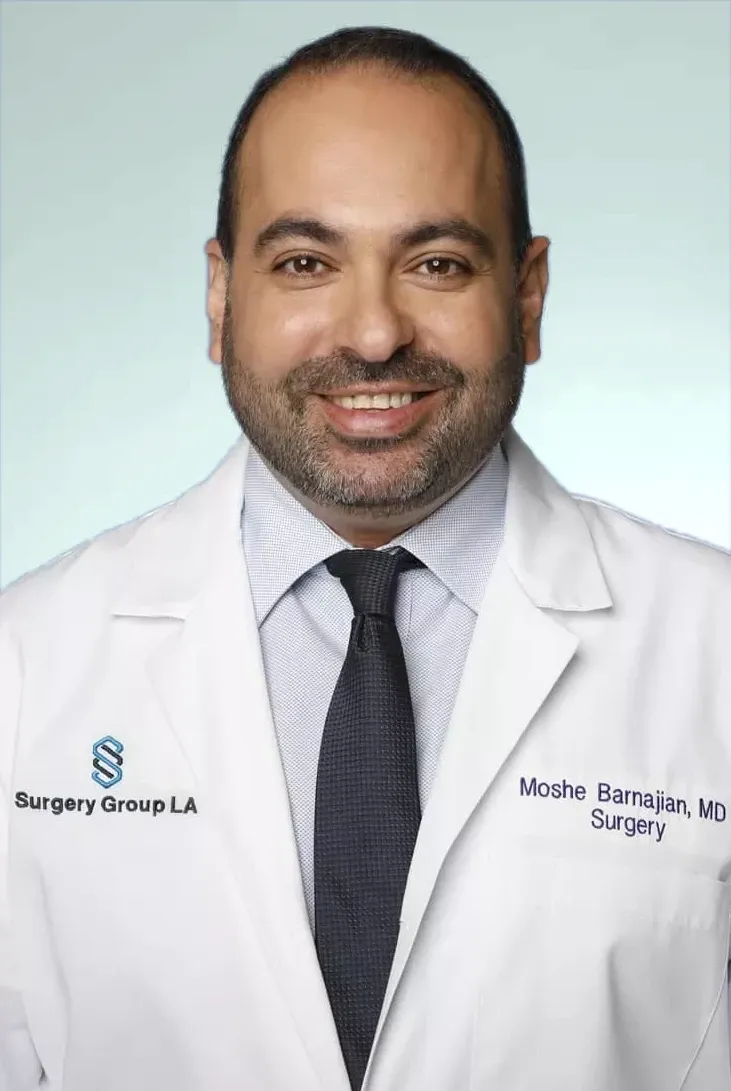
Dr. Moshe Barnajian
MD, FACS, FASCRS · Colorectal surgeon
Named a Super Doctors Rising Star by Los Angeles Magazine.
- Stony Brook fellowship
- Board certified colorectal
- Cedars-Sinai chief resident
Questions patients ask at the first visit
How many diverticulitis attacks before I should talk to a surgeon?
There isn't a fixed number. Surgeons now look at how often attacks happen, how severe they are, whether there were complications and how much they affect your life. If you've had two or more attacks or needed repeated antibiotics, a consultation is a reasonable next step.
Will I need a colostomy bag?
Most planned diverticulitis operations reconnect the colon during the same surgery, so no bag is needed. A temporary colostomy is more common in emergency surgery, which is one reason planning ahead matters. Your surgeon will discuss your specific risk.
How long is recovery after robotic colon surgery?
It depends on your health, the extent of the surgery and the kind of work you do. Your surgeon will give you a realistic timeline for going home, driving, returning to desk work and lifting before you schedule anything.
Can diverticulitis come back after surgery?
Removing the affected part of the colon greatly lowers the chance of further attacks, though it does not bring the risk to zero. Your surgeon can explain what that means in your case.
Do I need a referral to book a consultation?
Call us and we will check what your insurance plan requires. Please have any recent CT scan reports or colonoscopy results ready if you can.
Answers from our surgeons
All articles →

Bring your scans. Leave with a plan.
A diverticulitis consultation covers your attack history, your imaging and what you want from the next few years. Then you decide what happens next.