

Skip to content

Air bubbles in urine

If your urine looks fizzy, or you feel air sputter out at the end of urinating, there is a medical name for it: pneumaturia. It is not something to panic about, and it is not something to ignore. Gas does not normally get into the bladder, so a doctor will want to find out how it is getting there.

Two things people call bubbles

  • Foam on the water

    Common. Often from a fast stream or dark, concentrated urine. Foam that never goes away is worth mentioning to your primary doctor.

  • Air passing with urine

    Pneumaturia. A sputter, hiss or rush of air, sometimes with an odor like stool. This is the one to get checked.

What can put air in the bladder

There are a handful of possible causes. Only a doctor, usually with a urine test and a CT scan, can tell which one applies to you.

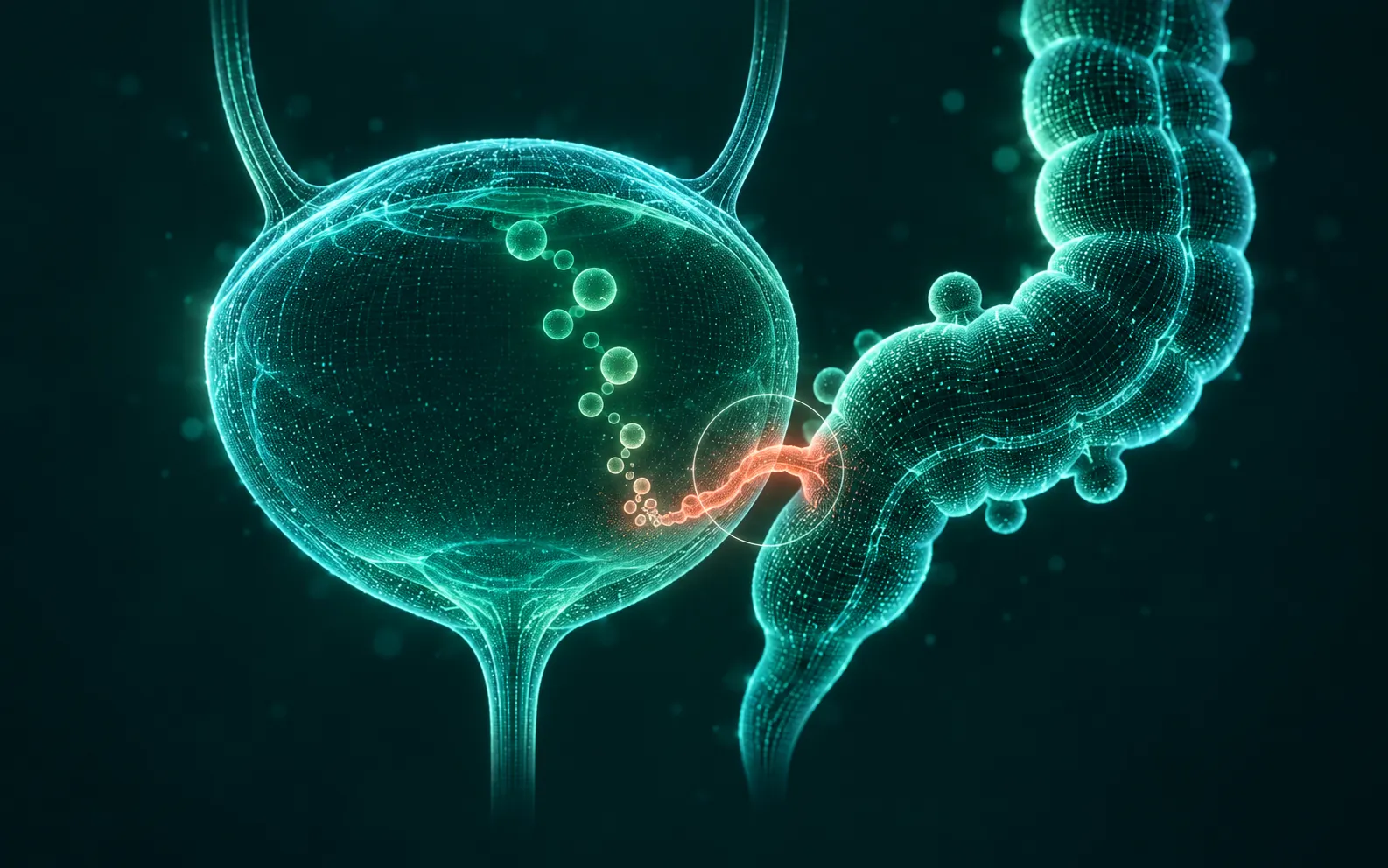
Illustration of the sigmoid colon touching the bladder, with a small channel and bubbles rising inside the bladder

A colovesical fistula

A small channel between the colon and the bladder, most often left behind by diverticulitis. Gas from the bowel slips into the bladder and leaves when you urinate. It is one of the more common reasons adults notice true air in the urine.

Many people with a fistula have had diverticulitis attacks before. Some never had a clear attack and only notice the urinary symptoms.

How a colovesical fistula is found and repaired
  • Crohn's disease

    Deep inflammation of the bowel can also open a tract into the bladder. It is less common than diverticulitis as a cause, and it is treated differently.

  • A tumor in the colon or bladder

    Uncommon, but it is one reason doctors look carefully with a scan or a camera rather than assuming the cause.

  • A gas-forming bladder infection

    Certain bacteria can produce gas inside the bladder. This is rare and is seen more often in people with diabetes. It needs prompt treatment.

  • A recent catheter or bladder procedure

    Air can be introduced during a catheter, cystoscopy or similar test and pass on its own over the next day or so.

Five things to write down before your appointment

These details help a doctor decide which tests make sense first. They also save time if you are later referred to a colorectal surgeon.

If infections keep returning as well, the recurrent UTI guide covers the patterns that point toward the colon.

  1. 01

    When you first noticed it

    And whether it happens every time or comes and goes.

  2. 02

    Any odor or specks

    Urine that smells like stool, or small bits of debris in the toilet.

  3. 03

    Urine infections

    How many in the past year, and any culture results you have.

  4. 04

    Diverticulitis history

    Past attacks, CT reports and how they were treated.

  5. 05

    Past surgery

    Especially a hysterectomy, which removes a natural barrier between the colon and bladder.

If the cause is a fistula, a colorectal surgeon closes it

Antibiotics can quiet the infections a fistula causes, but the channel itself rarely closes on its own. The usual fix is a planned operation that removes the inflamed section of colon and repairs the bladder, often done robotically.

Planning that surgery once the infection has settled, instead of during a bad flare, tends to make it simpler. Read more about planned diverticulitis surgery or Dr. Nasseri's article on air in the urine as a hidden sign.

Dr. Nasseri & Dr. BarnajianColorectal surgeons focused on diverticulitis, at Cedars-Sinai

Air in your urine plus past diverticulitis? The one minute self-check tells you whether it is time to see a surgeon.

Take the self-check

Questions about air in the urine

Are foamy or bubbly urine and air in the urine the same thing?

Not usually. Foam that sits on the surface of the toilet water is common and often comes from a strong stream or concentrated urine. Persistent foam can be a sign of protein in the urine, which your primary doctor can check. Pneumaturia means gas actually passing out with the urine, often felt as sputtering at the end of the stream.

What does it mean if my urine smells like stool?

An odor like stool, especially together with air in the urine, can mean material from the bowel is reaching the bladder. A colovesical fistula is one possible cause. It is worth seeing a doctor, who can arrange a urine test and usually a CT scan.

Is air in the urine an emergency?

On its own it is usually not an emergency, but it should be checked soon rather than ignored. Go to an emergency room if you also have a high fever, severe belly pain, vomiting or you cannot pass urine.

Which doctor should I see about pneumaturia?

Your primary doctor or a urologist can start the workup. If the cause looks like a fistula from diverticulitis, the repair is done by a colorectal surgeon, often working with a urologist.

This page is general information, not a diagnosis. Severe belly pain, a high fever, vomiting or being unable to pass urine needs urgent care.

Bring your scans. Leave with a plan.

Tell us when the air in your urine started and bring any urine cultures or CT reports you have. We will look at whether a colovesical fistula could explain it, arrange any missing tests and explain the options before anything is decided.