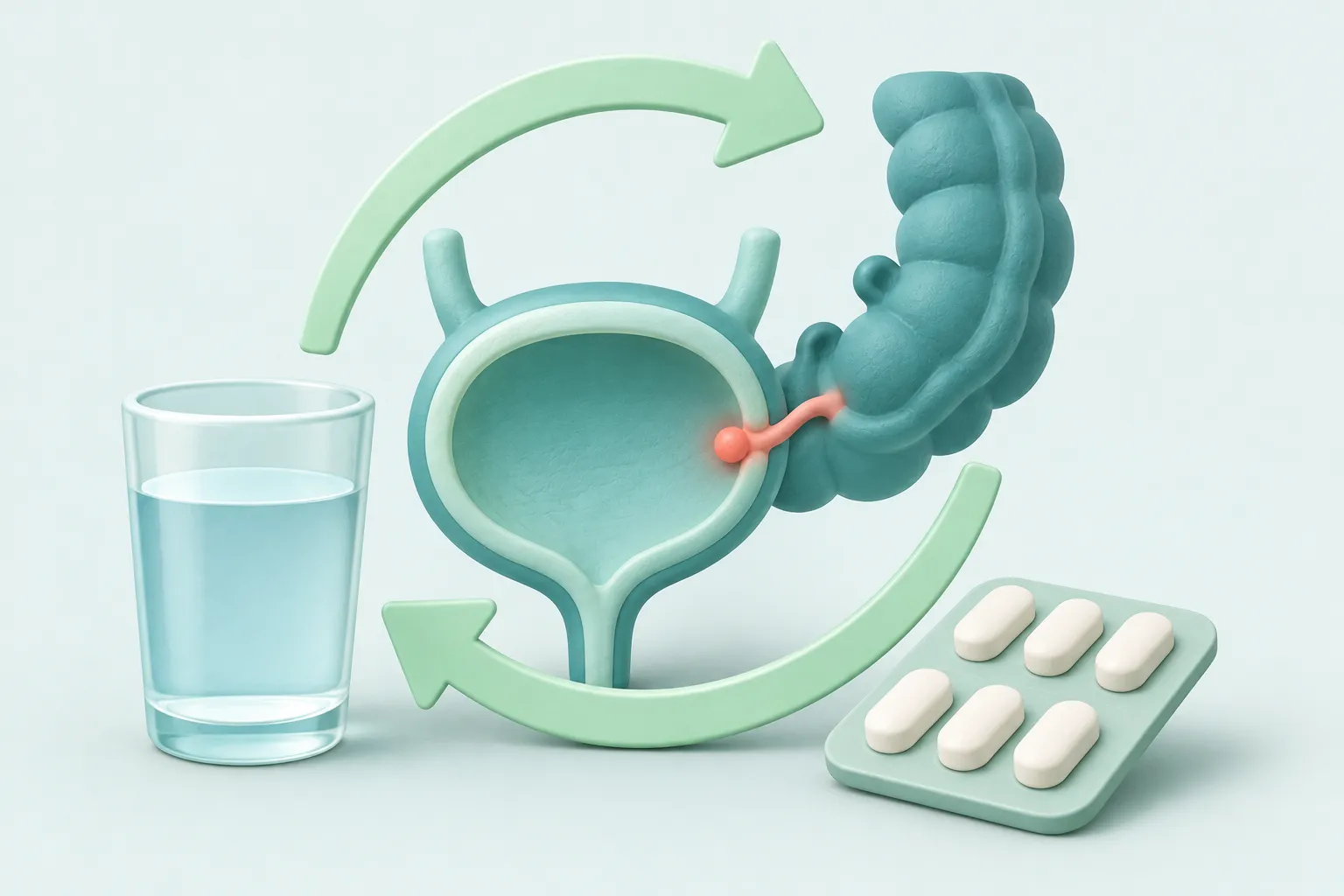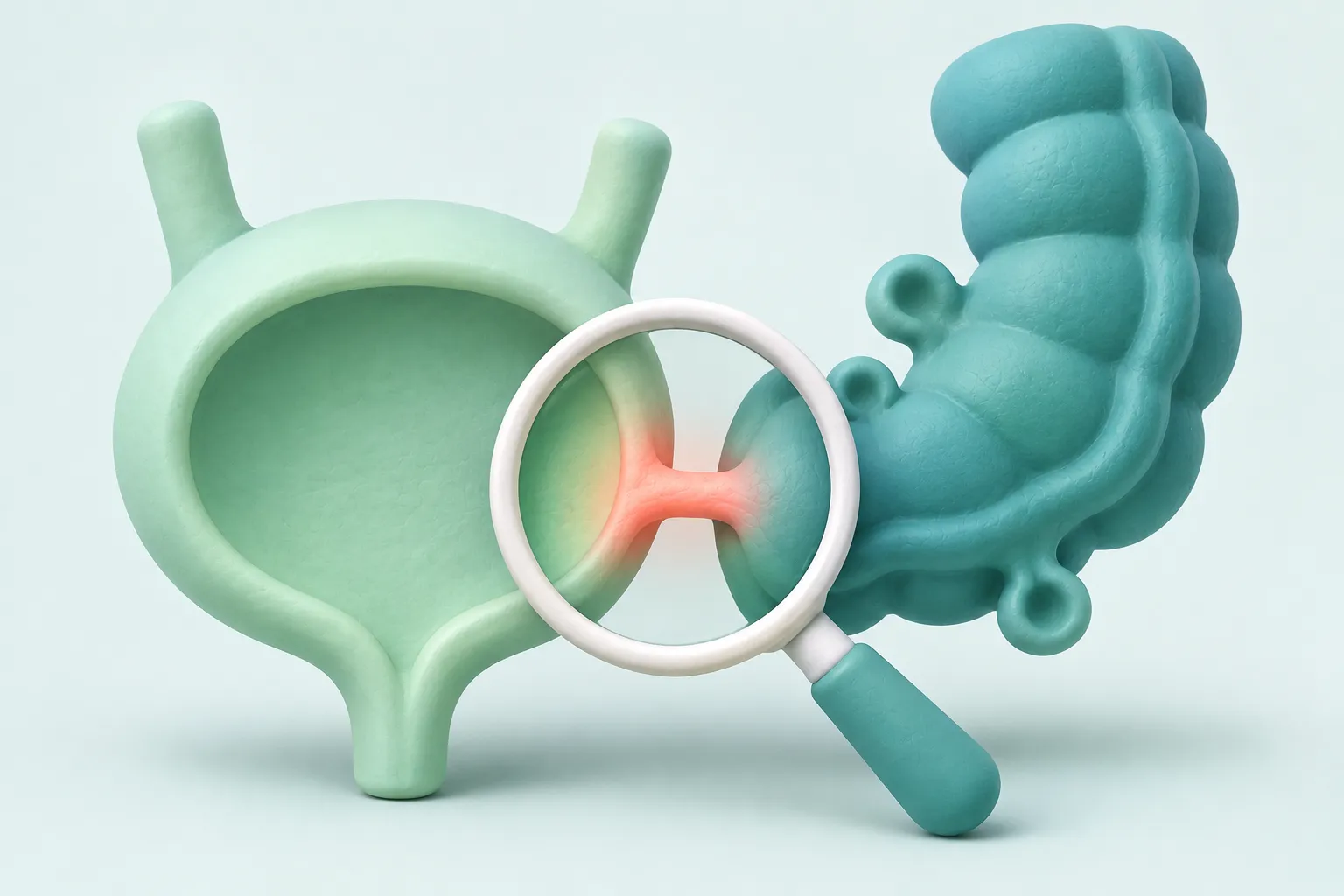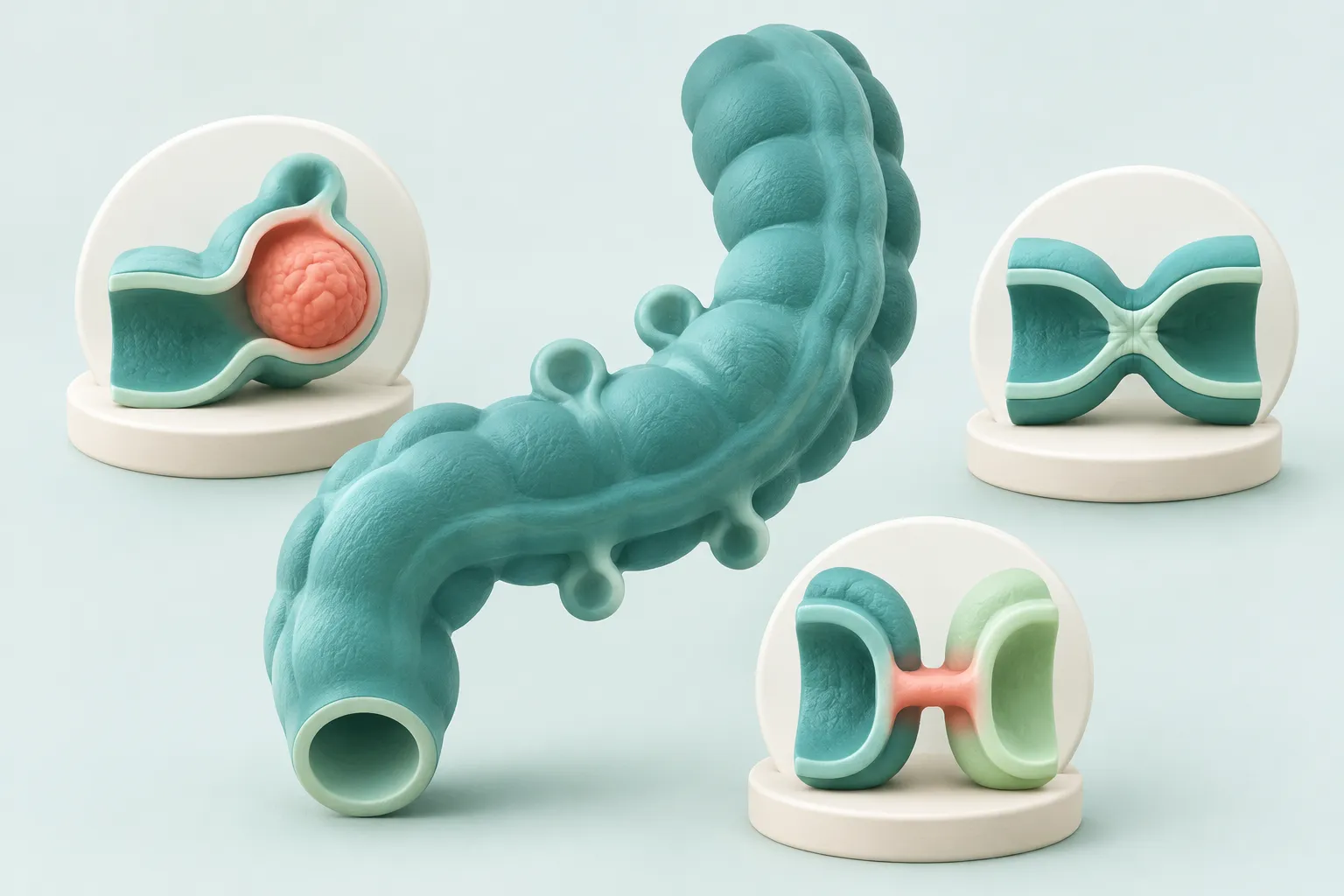




Air or bubbles in your urine: a hidden sign of a colon to bladder fistula
Passing air when you urinate can point to a colovesical fistula in people with diverticulitis. What it feels like, other causes and what to do.

By Dr. Yosef Nasseri, colorectal surgeon
, 4 min read
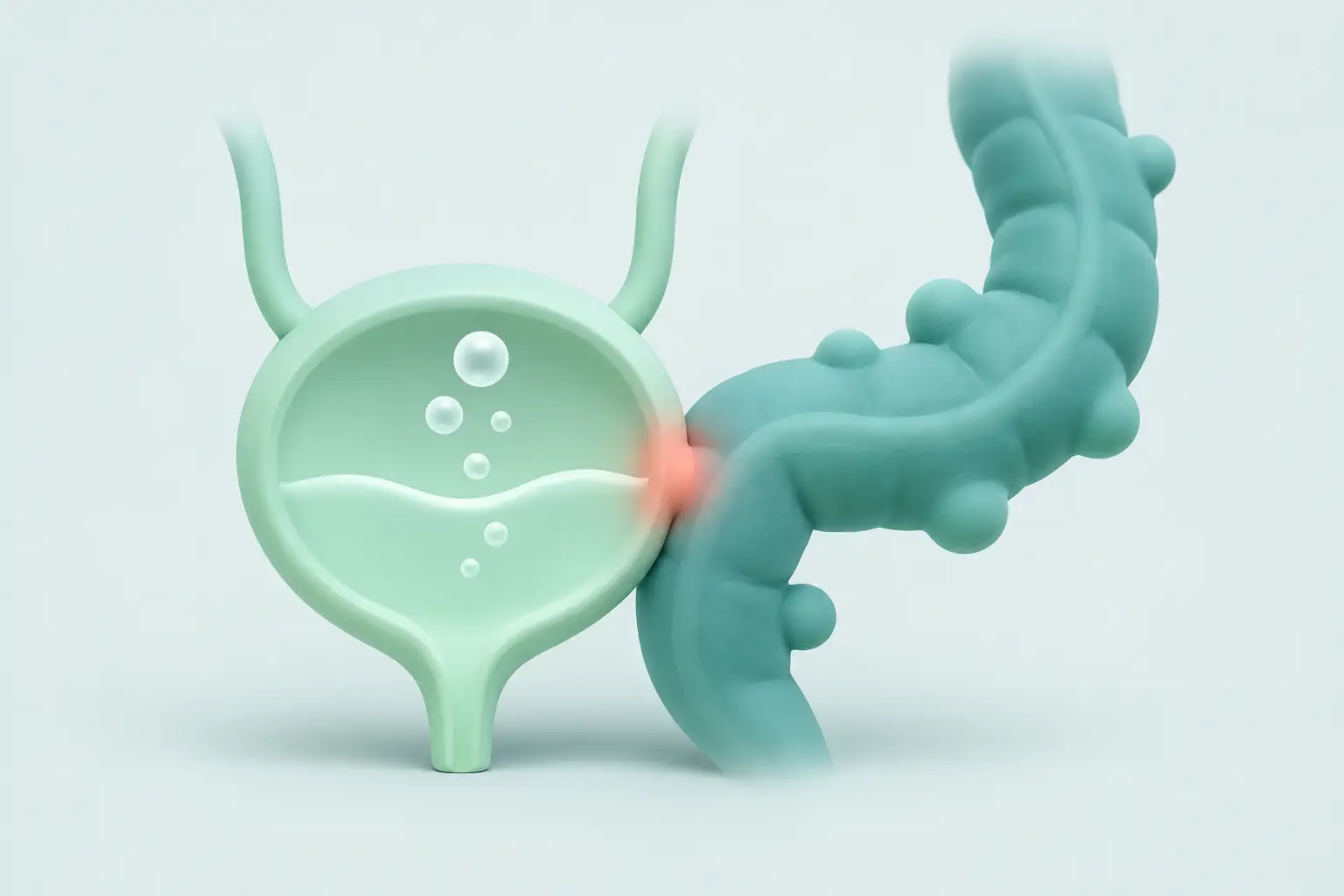
Most people do not mention it at first. It feels odd to describe, and it does not hurt. But when I ask patients with diverticulitis whether they have ever noticed air when they urinate, a surprising number pause and say yes.
Passing air in the urine has a medical name, pneumaturia. It is not common, and when it happens in someone with a history of diverticulitis, one of the possible causes is a small channel between the colon and the bladder, called a colovesical fistula. It is very treatable. The challenge is that it often goes unrecognized for months.
What people actually notice
Pneumaturia does not always look like bubbles. People describe it in different ways:
- A sputtering or spitting stream, as if air is mixed in
- A sensation of gas passing at the end of urinating
- Urine that looks fizzy or “carbonated” in the bowl
- A hissing or popping sound when they finish
It often comes with other clues. Urine may smell like stool, or have small specks or cloudy debris in it. Many people have also had urinary infections that keep coming back, sometimes with more than one type of bacteria on the urine test. Belly pain can be mild or absent, which is part of why the colon is not suspected at first.
Foamy urine is usually something different
This is worth separating out, because people search for both. Foamy urine, where a layer of foam sits on the surface and lingers, is not the same as passing air. Foam can come from a fast stream, mild dehydration or, in some cases, protein in the urine, which is a kidney question rather than a colon one.
Pneumaturia is about gas coming out with the urine. If you are not sure which you have, describe exactly what you see and feel to your doctor. Both are worth mentioning.
How the colon can reach the bladder
The sigmoid colon, the last curve of the large intestine where most diverticulitis happens, sits right on top of the bladder. When a diverticulum becomes inflamed, the colon can stick to the bladder wall. Over time, sometimes after a small abscess, the inflammation can wear an opening through.
Once that channel exists, gas and bacteria from the colon can pass into the bladder. That is why the signs show up in the bathroom rather than as stomach pain. If you would like the full explanation of how a fistula forms and how it is repaired, I go through it step by step in what is a colovesical fistula.
Other causes of air in the urine
A fistula is not the only explanation, and it is important not to jump to conclusions. Other possible causes include:
- Recent procedures. A urinary catheter or a camera test of the bladder can introduce a little air for a short time afterward.
- Some urinary infections. Certain bacteria produce gas. This is more common in people with diabetes.
- Other bowel conditions. Crohn’s disease can also cause fistulas, and less often a tumor of the colon or bladder can.
- Previous radiation to the pelvis, which can affect the tissues between organs.
Sorting through these is exactly what a proper evaluation is for. It is also one reason a fistula should be confirmed and its cause understood before any surgery is planned.
What to do if you notice it
There is no need to panic. A colovesical fistula is rarely an emergency. But it is also unlikely to go away on its own, so it is worth acting on.
- Make a note of what you see. When it started, how often it happens, whether your urine smells unusual, and any infections you have had.
- Gather your records. Urine culture results, lists of antibiotics and any CT scans or reports are all helpful.
- Tell your doctor specifically about the air. Use the words “air in my urine” so it is not mistaken for another bladder infection.
- Ask about imaging. A CT scan of the abdomen and pelvis is usually the most useful first test. It can show air in the bladder and inflamed colon pressed against it.
- See a colorectal surgeon if a fistula is suspected. Urologists are often involved too, and the two teams usually work together.
Our page on air bubbles in urine has a shorter checklist you can bring to an appointment.
When it needs urgent attention
Most people with pneumaturia can be seen in the normal way. Go to an emergency room if you have a high fever, shaking chills, severe belly or back pain, vomiting, confusion or you cannot pass urine. Those can be signs of a more serious infection.
Why I want people to know about this sign
The reason I talk about pneumaturia so often is that it is easy to miss. Someone gets a bladder infection, takes antibiotics, feels better, and then it comes back. Then it happens again. Each infection is treated on its own, and nobody asks about the colon. Months can pass that way.
Once the fistula is found, the path is usually clear. For most people who are healthy enough, the treatment is a planned operation to remove the diseased section of colon and close the opening in the bladder. It can often be done with a minimally invasive or robotic approach, and in most planned repairs the colon is reconnected during the same operation.
If you have noticed air in your urine and you have a history of diverticulitis, or even just a run of infections that do not make sense, it is worth a closer look. You can take our short self-check, or book a consultation and bring whatever records you have. We will help you find out what is going on.

Dr. Yosef Nasseri, MD, FACS, FASCRS
Colorectal surgeon with Surgery Group LA who treats recurrent and complicated diverticulitis. Associate Professor of Surgery at Cedars-Sinai and Director of the SGLA Research Foundation.