
Diverticulitis complications explained: abscess, stricture and fistula
Abscess, stricture and fistula are the most common complications of diverticulitis. What each one is, the clues it gives and how it is treated.

By Dr. Moshe Barnajian, colorectal surgeon
, 5 min read
Most diverticulitis attacks are what doctors call uncomplicated. The inflammation stays in the wall of the colon, and it settles with rest, sometimes antibiotics, and time. Many people never have anything more than that.
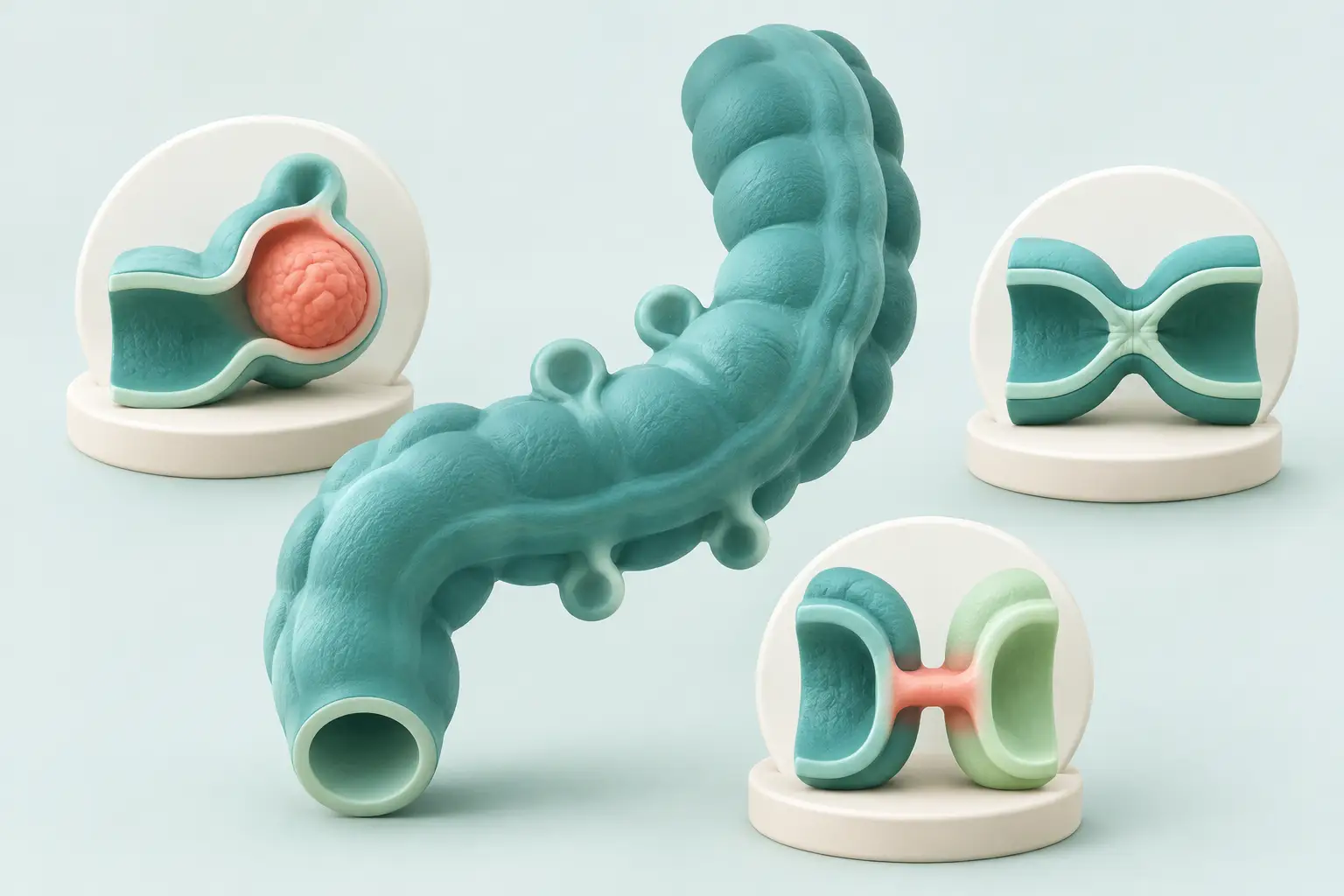
Sometimes, though, a CT report uses words like “abscess,” “stricture” or “fistula,” and suddenly the situation feels more serious. This article explains what those words mean, how each one usually behaves, and how it tends to be treated. When doctors talk about complicated diverticulitis, these are the problems they mean, along with perforation.
First, a quick picture of the colon
Diverticula are small pouches that bulge outward through weak spots in the colon wall. Having them is called diverticulosis, and it is very common, especially with age. Most people with diverticula never have a problem.
Diverticulitis is when one or more of those pouches becomes inflamed. Each complication below is what can happen when that inflammation spreads beyond the colon wall, or heals in a way that causes new trouble.
Abscess: a pocket of infection next to the colon
What it is. When an inflamed pouch develops a small tear, the body often walls off the leak. The result can be a collection of pus just outside the colon, called a diverticular abscess.
What it can feel like. Usually more pain than a typical attack, often with fever that does not come down, and a sense that the attack is not improving on antibiotics.
How it is found. A CT scan shows the abscess and how large it is.
How it is usually treated. Small abscesses often respond to antibiotics, sometimes given in hospital. Larger ones may be drained with a thin tube placed through the skin by a radiologist, guided by CT. This often lets the infection clear without emergency surgery.
What comes next. After an abscess has been treated, many surgeons discuss planned surgery once things have settled, because there can be a higher chance of further problems. It is not automatic, and the decision depends on the person. But it is a conversation worth having.
Stricture: a narrowing of the colon
What it is. Each attack of inflammation heals with some scar tissue. After repeated attacks, the wall of the colon can thicken and narrow. That narrowed section is called a stricture.
What it can feel like. Many people notice gradual changes rather than a sudden attack: more constipation, thinner stools, bloating, cramping after meals, or a sense of incomplete emptying. In more severe cases, the colon can become partly or completely blocked, which causes swelling of the belly, vomiting and an inability to pass gas or stool.
How it is found. CT and colonoscopy are both used. Colonoscopy is especially important, because a narrowing in the colon can also be caused by cancer, and the two need to be told apart. If a scope cannot pass through the narrowing, other imaging may be needed.
How it is usually treated. A stricture that is causing symptoms usually needs surgery to remove the narrowed section. Because the scar tissue is permanent, medications do not reverse it. Surgery is usually planned, though a complete blockage can require urgent treatment.
Fistula: a connection to another organ
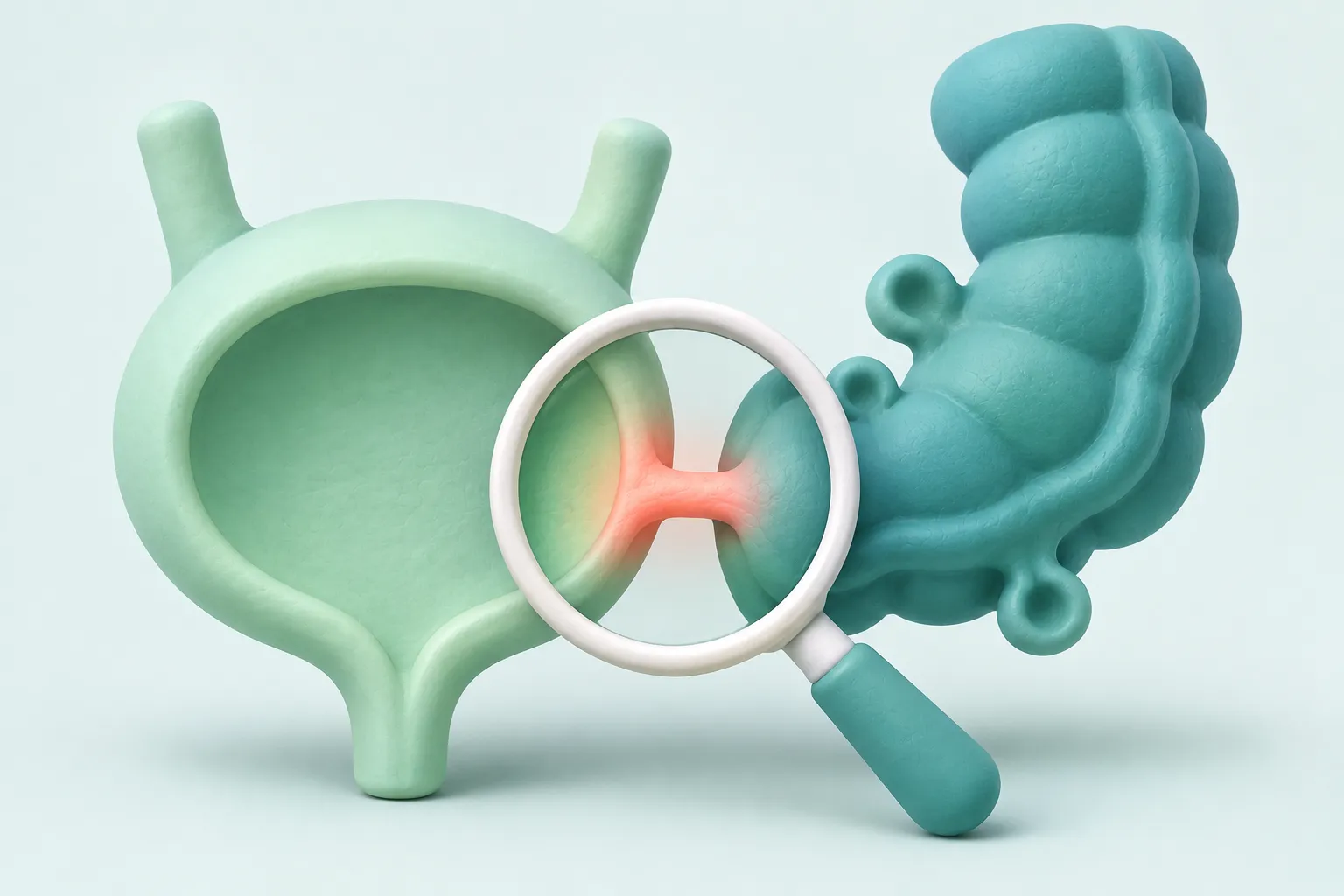
What it is. When the inflamed colon sticks to a nearby organ, the inflammation can wear a channel between them. That channel is a fistula. It can connect the colon to:
- The bladder. This is a colovesical fistula, the most common type. It typically causes air in the urine, urine that smells like stool and repeated urinary infections.
- The vagina. A colovaginal fistula can cause gas or stool-like discharge from the vagina. It is more common in women who have had a hysterectomy.
- The skin. A colocutaneous fistula is a connection to the surface of the abdomen. It can drain stool or gas through an opening in the skin, and sometimes follows previous surgery or drainage.
- The small bowel, less commonly.
How it is found. CT scans are usually the starting point, along with tests specific to the organ involved, such as a cystoscopy for the bladder.
How it is usually treated. Fistulas rarely close on their own. Most people who are well enough are offered planned surgery to remove the affected section of colon and repair the other organ. Fistulas are generally not emergencies, so there is time to prepare.
Perforation: the one that needs urgent care
A perforation is a hole in the wall of the colon. When it is small and walled off, it may behave like an abscess. When it opens freely into the abdomen, infection can spread quickly, causing peritonitis. That is a surgical emergency.
Signs include sudden, severe pain that spreads across the belly, a rigid or very tender abdomen, high fever, vomiting and feeling faint. If you have these, go to an emergency room. Our page on perforated diverticulitis explains what happens next.
A quick way to tell them apart
| Complication | What happens | Typical clue | Usual treatment |
|---|---|---|---|
| Abscess | Pocket of infection outside the colon | Fever and pain that do not settle | Antibiotics, sometimes a drain |
| Stricture | Scarred, narrowed colon | Gradual constipation, bloating, cramping | Planned surgery if symptomatic |
| Fistula | Channel to bladder, vagina or skin | Symptoms in the other organ | Planned surgery |
| Perforation | Hole in the colon wall | Sudden severe pain, rigid belly | Emergency care |
What about smoldering diverticulitis?
Some people never have a clear complication, but they also never fully recover between attacks. Pain and inflammation linger for weeks or months. This is sometimes called smoldering diverticulitis. It is not one of the classic complications, but it can affect quality of life just as much, and it is another situation where surgery is sometimes considered.
Why complications change the conversation
For uncomplicated diverticulitis, whether to have surgery is a judgment call based on how often attacks happen and how much they affect you. Once a complication has developed, the balance often shifts. Fistulas and symptomatic strictures generally need surgery to resolve. After an abscess, planned surgery is often discussed.
The good news is that, apart from perforation, most of these are found when there is still time to plan. A planned operation, often done with a robotic or laparoscopic approach, usually allows the colon to be reconnected in the same surgery.
If a scan has mentioned any of these words, please do not try to work out the answer alone. Take the report to a colorectal surgeon. You can start with our self-check, or book a consultation with Dr. Nasseri or me. We will explain what your scan shows and what your options are.

Dr. Moshe Barnajian, MD, FACS, FASCRS
Colorectal surgeon with Surgery Group LA who treats recurrent and complicated diverticulitis. Named a Super Doctors Rising Star by Los Angeles Magazine.