




Skip to content

Perforated diverticulitis

An emergency today. A plan for what comes after.

A perforation is a tear in the wall of an inflamed colon pouch. It needs hospital care right away. Once you are through it, the next steps, such as a colostomy reversal or a planned operation, can happen on your schedule.

Severe belly pain with fever right now? Go to the nearest emergency room or call 911. Do not wait for an appointment.

Dr. Nasseri & Dr. BarnajianColorectal surgeons for diverticulitis care after the ER, at Cedars-Sinai

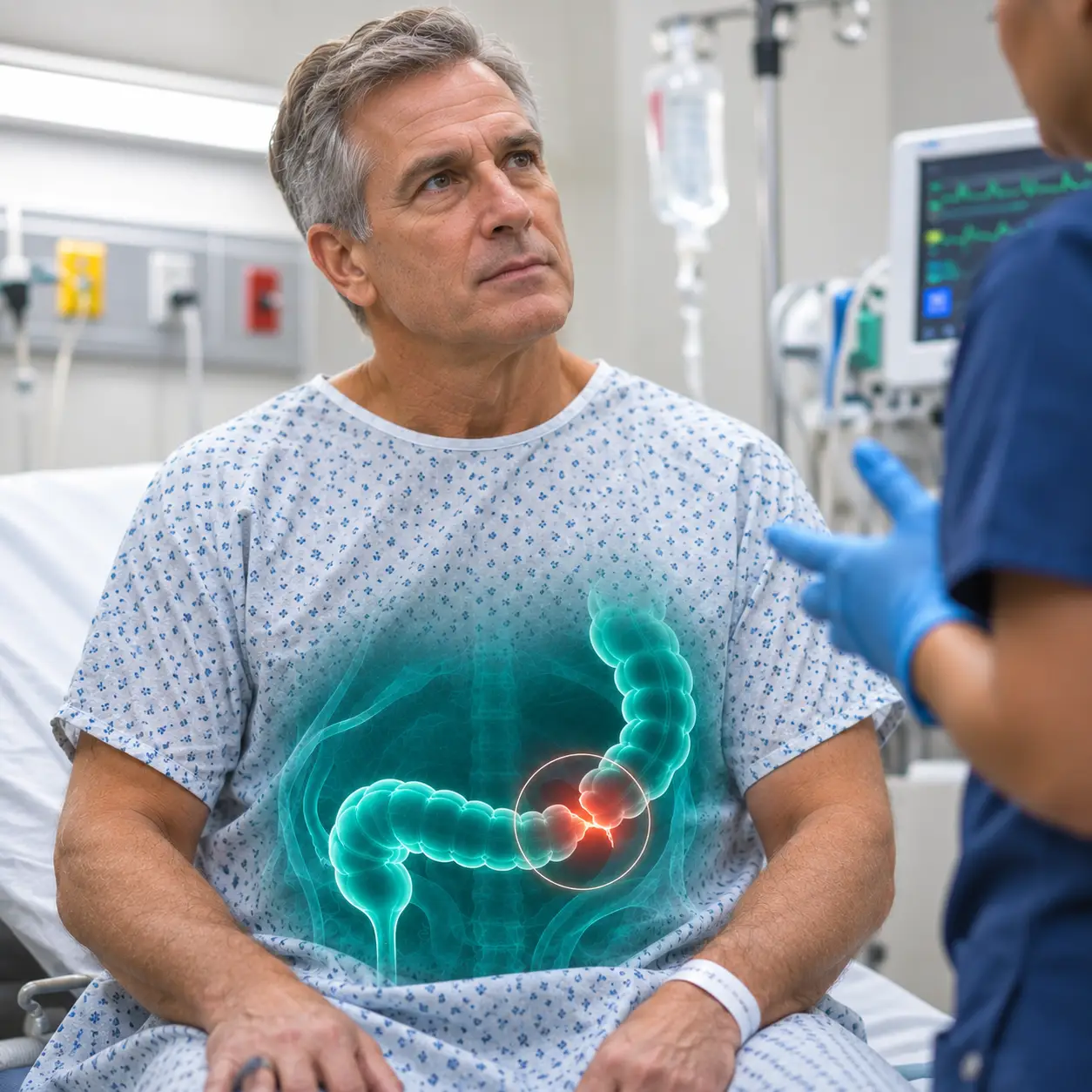
A man in a hospital gown sitting on a bed and listening to a nurse, with a scan overlay showing a small tear in the colon

The hospital stay is the start. The recovery plan matters just as much.

Signs that need the ER, not an appointment

Ordinary diverticulitis pain tends to build over a day or two. A perforation often feels different: sudden, sharp and much worse than your usual flare.

Call 911
  • Sudden, severe belly pain that spreads or keeps getting worse
  • A belly that feels hard, swollen or very tender to touch
  • Fever or chills with that pain
  • Vomiting, or being unable to keep fluids down
  • Feeling faint, a racing heart or confusion
  • Already treated in hospital? The rest of this page is about what comes next.
Illustration of the sigmoid colon with a small tear in one inflamed pouch

What happens when the colon wall tears

An inflamed pouch, or diverticulum, can weaken until a small hole opens in it. Doctors usually describe two kinds.

Contained

A small tear the body walls off

Nearby tissue seals around the leak. It often shows up as a pocket of infection, or abscess, next to the colon.

Free

An opening into the abdomen

Air and bowel contents spread into the belly lining and cause peritonitis. This is the form that usually needs surgery the same day.

Treatment depends on how big the tear is

A CT scan in the emergency room shows which of these fits. Most people are in hospital for several days either way.

  1. Smaller, contained

    Antibiotics and close watching

    Many people with a contained perforation settle in hospital with IV antibiotics, rest for the bowel and repeat checks.

  2. With an abscess

    A drain placed through the skin

    A larger pocket of infection can be drained with a thin tube guided by CT, which often avoids emergency surgery.

  3. Free perforation

    Emergency surgery

    The torn section of colon is removed. Sometimes the ends are joined again, and sometimes a temporary colostomy gives the area time to heal.

After the hospital, you get to plan

The emergency decides the first operation. The next one, if you need it, is a planned surgery with time to prepare, a known date and a surgeon you have met.

If you came home with a colostomy

Talking about reversal

Many temporary colostomies can be reversed, often a few months after the emergency. Before that, your surgeon checks the rest of the colon, usually with a colonoscopy, and makes sure you have recovered your strength.

What recovery looks like


If you were treated without surgery

Deciding on a planned colectomy

After a perforation, many people talk with a surgeon about removing the affected part of the colon once things have calmed down. Done as a planned operation, it is often possible robotically and without a colostomy.

Why planned surgery matters

The surgeons you see after the emergency

Bring your hospital discharge papers and CT reports. Dr. Nasseri or Dr. Barnajian will go through what was found, what was done and what the options are now, whether that is a reversal or a planned operation. Visits and surgery are at Cedars-Sinai in Los Angeles.

Questions about a perforated colon

Related: diverticular abscess, complicated diverticulitis, robotic colectomy.

Can a perforated colon heal without surgery?

A small, contained perforation often can, with antibiotics in hospital and sometimes a drain. A free perforation with infection spreading through the abdomen usually needs surgery. The CT scan and how you are doing guide that decision.

Will I need a colostomy?

Not always. In an emergency, a surgeon may create a temporary colostomy when the area is too inflamed to rejoin safely. Many of these can be reversed later in a planned operation.

When can a colostomy be reversed?

Often a few months after the emergency, once you have recovered and the inflammation has settled. Your surgeon will check the remaining colon first and choose the timing with you.

Could it happen again?

It can. That is why it helps to talk with a colorectal surgeon once you are home, about whether a planned operation makes sense to lower the chance of another emergency.

How is a perforation found?

Usually with a CT scan in the emergency room. It can show air outside the bowel, a pocket of infection or fluid in the abdomen.

This page is general information, not a diagnosis. If you have sudden severe belly pain, call 911 or go to the nearest emergency room.

Home from the hospital? Let’s plan the next step.

Bring your discharge summary and CT reports. We will explain what happened, whether a colostomy reversal or a planned colectomy makes sense, and when. Appointments are at our Los Angeles office on the Cedars-Sinai campus.