


Recurrent UTI that keeps coming back
Sometimes the source is the colon, not the bladder
Most recurrent UTIs have common, treatable causes. A smaller group keep returning because bacteria are reaching the bladder from the bowel, through a connection that diverticulitis can create. Knowing the patterns helps you ask the right questions.
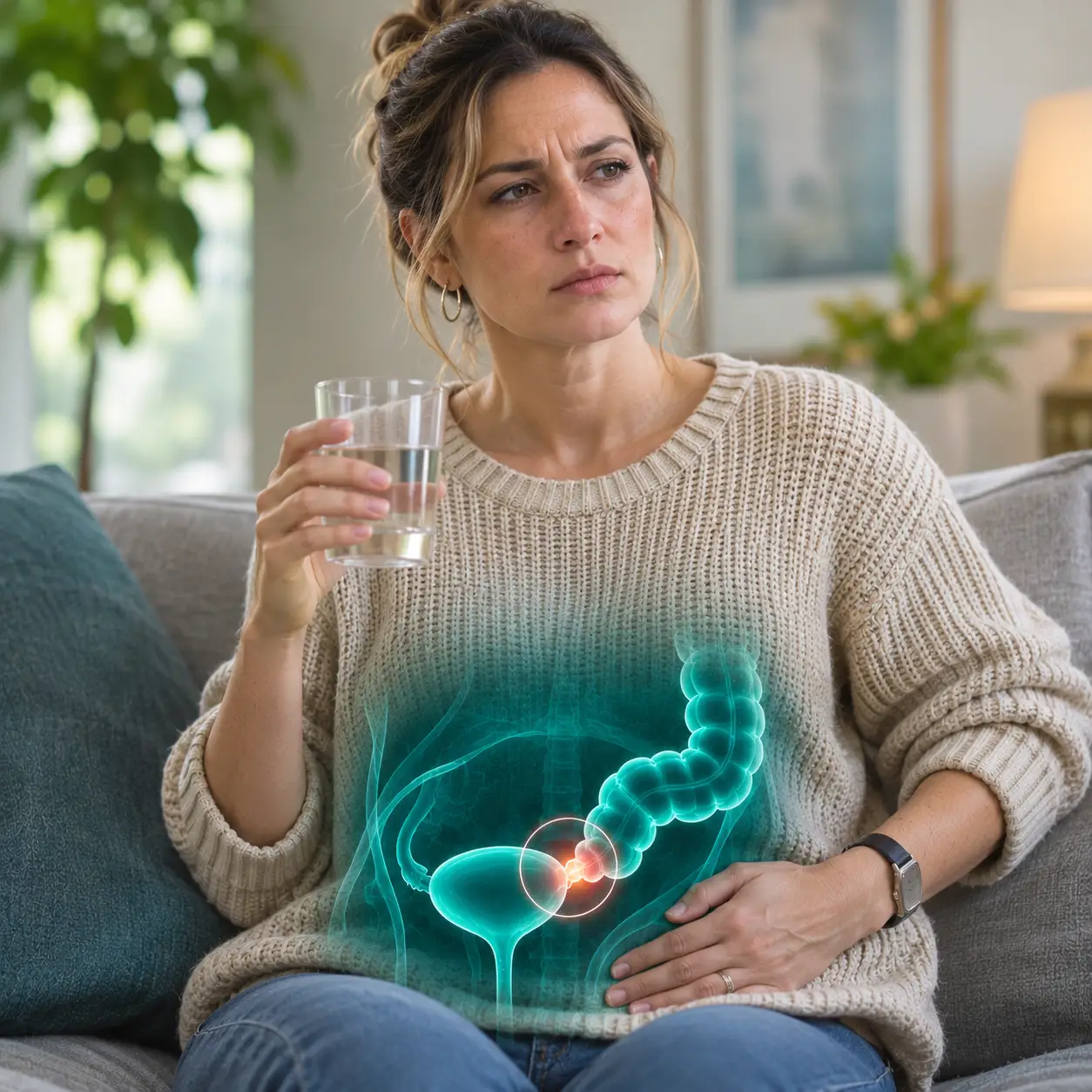
If this loop sounds familiar, the cause may not have been found yet
- Burning and urgency
- Urine test
- Antibiotics
- Feels better
- It comes back
- and again
Patterns that point toward the colon
None of these proves anything on its own. Together, they are a reason to ask your doctor whether a colovesical fistula has been considered.
What a colovesical fistula isYou are a man with repeated UTIs
Bladder infections are much less common in men, so more than one usually prompts a search for a reason. A colon to bladder connection is one of the things worth ruling out.
The culture grows more than one type of bacteria
A urine culture that shows a mix of bowel bacteria, rather than a single organism, can be a sign that bowel contents are reaching the bladder.
There is air or a stool odor in your urine
Fizzing, air at the end of the stream, or urine that smells like stool are classic clues. See the guide on air bubbles in urine.
Air bubbles in urineYou have had diverticulitis
Past attacks, or a CT report that mentions diverticula in the sigmoid colon, make a fistula a more likely explanation.
You have had a hysterectomy
In women, the uterus normally sits between the colon and the bladder. Without it, the two can come into contact.
It returns soon after every course of antibiotics
Infections that clear on treatment and come back within weeks suggest a source that antibiotics cannot remove.
For most people, recurrent UTIs have nothing to do with diverticulitis
Repeat bladder infections are common, especially in women, and are usually linked to anatomy, hormones, sexual activity or how the bladder empties. Your primary doctor or a urologist is the right first stop.
The colon becomes part of the conversation when the patterns above show up, or when the usual treatments keep failing. That is when a CT scan and a surgeon's opinion are worth having.
How a colon to bladder connection is checked
Step 1
Review
Your infection history, culture results and any past CT scans.
Step 2
CT scan
Can show air in the bladder and inflamed colon pressed against it.
Step 3
Camera tests if needed
Cystoscopy looks inside the bladder. Colonoscopy checks the colon.
If a fistula is confirmed, the usual treatment is a planned operation once infection has settled, often done robotically. Read about robotic colectomy, why planned surgery matters, or Dr. Nasseri's article on why a UTI keeps coming back.
Questions about recurrent UTIs
How many UTIs count as recurrent?
Doctors often use the term for two infections within six months, or three within a year. The exact number matters less than the pattern. Infections that keep returning deserve a look at the reason.
Can diverticulitis cause UTIs?
Yes, in some people. When inflammation from diverticulitis creates a channel between the colon and the bladder, called a colovesical fistula, bowel bacteria reach the bladder and infections keep coming back. Most recurrent UTIs have other causes, so testing is what tells them apart.
Will more antibiotics fix it?
Antibiotics treat each infection, but if a fistula is the source they cannot close it, so the infections tend to return. In that case the lasting fix is usually a planned operation to remove the inflamed colon and repair the bladder.
Should I see a urologist or a colorectal surgeon?
A urologist or your primary doctor usually starts the workup for repeated infections. If tests point to the colon, a colorectal surgeon plans the repair, often together with a urologist.
This page is general information, not a diagnosis. Severe belly pain, a high fever, vomiting or being unable to pass urine needs urgent care.
Related reading
- Article
Why your UTI keeps coming back
And when it is not a urinary problem at all. - Complication
Colovesical fistula
When the colon connects to the bladder, and how it is repaired. - Symptom
Air bubbles in urine
What pneumaturia can mean and what to write down. - Complication
Colovaginal fistula
Gas or stool from the vagina, often after a hysterectomy.
Bring your scans. Leave with a plan.
Bring your urine culture results and a rough list of past infections and antibiotics. If you have had diverticulitis or a CT scan, bring that too. We will look at whether the colon could be behind the infections and explain what would help.